
Satire
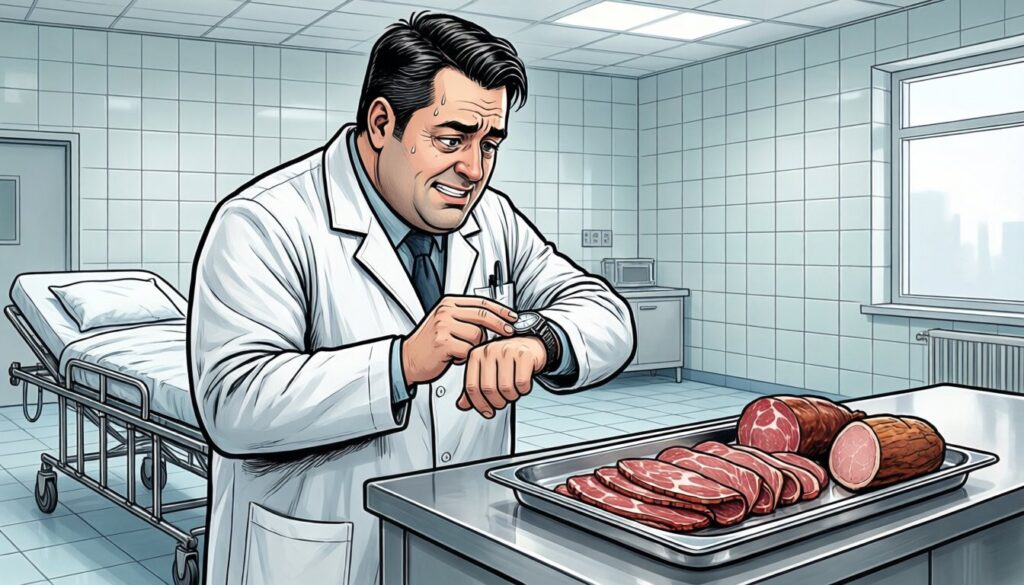
Autopsy Team Admits They Skipped Epstein’s Back to Make Lunch
Satire – none of this happened.
WASHINGTON — A newly released report has revealed that the medical examiners responsible for the 2019 autopsy of Jeffrey Epstein did not overlook his injuries due to a lack of skill, but rather because they were trying to beat the clock to the cafeteria.
According to the report, the forensic team was operating under a strict 'lunch break protocol' that prioritized punctuality over thoroughness. When the body was wheeled into the examination room, the lead examiner allegedly checked his watch, noted that the kitchen was serving the daily special of cold cuts, and decided that a full, detailed inspection of the deceased's torso and back would take too long.
"We had a tight schedule," one of the examiners is quoted as saying in the report. "The lunch line gets long if you wait past 12:15. We did what we could with the time we had."
The report details how the team performed a 'quick sweep' of the body, focusing primarily on the face and hands, which were deemed 'high-visibility areas.' The rest of the body, including the areas where the alleged injuries were later found, was described in internal memos as 'low priority' and 'not worth the extra time.'
The US Department of Justice, which oversees the medical examiner's office, has not commented on the specific lunch break policies in place at the time. However, a spokesperson for the department stated that the agency is committed to 'efficiency and timely resolution of cases,' a phrase that has since become a popular meme on social media.
Critics of the original autopsy have long argued that the examination was rushed and lacked the rigor expected in a case of such high public interest. The new report appears to confirm those suspicions, suggesting that the 'overlooked' injuries were not a result of human error, but of a deliberate choice to prioritize personal convenience over professional duty.
The report has sparked a renewed debate about the standards of forensic examination in high-profile cases. Some experts have called for a review of the protocols used by medical examiners, while others have suggested that the issue is less about the procedures and more about the culture of the institution.
"It's not that they didn't know how to do it," said one forensic pathologist who reviewed the report. "It's that they didn't want to. They were more interested in their lunch than in the truth."
The report does not specify whether the examiners actually made it to the cafeteria on time. It does, however, note that the body was released to the family just 45 minutes after the examination began, a record for the facility at the time.
—
Satire. This piece is invented. What actually happened: Why a trio of experts alleges Jeffrey Epstein did not die by suicide (aljazeera.com).
This article was drafted with AI assistance and checked before publication.